Tag Archives: Politics

Response to our open letter to Caroline Lucas

So I finally received a reply to our open letter to Caroline Lucas of the Green Party of England and Wales. Here it is with my response:

“Dear Jamie,

Thank you for getting in touch and apologies for not replying sooner – I get a lot of correspondence and give priority to that from my constituents.

As you know, the Green Party fully backs having a “re-open nominations” option on the ballot paper and I’d agree that a “none of the above” option is in the same spirit. It’s not possible for us to campaign on everything and I don’t think we’ll be doing anything proactive on this in the immediate future, but I’ll let the campaigns coordinators know about the open letter and your calls.

In terms of changing policy, that’s done by members and the policy coordinators, copied in above, should be able to tell you whether there’s ever been any proposals along these lines.

Best wishes, Caroline”
—————————————————————————————–

“Dear Caroline,

Thank you for your reply.

A couple of things, firstly Re-Open Nominations and NOTA are more or less the same thing, my issue with the current Green Party policy is that to many RON will be seen as a needlessly technical and jargonistic term, the preserve of political parties, student unions and the like. Most voters, as you know, are not necessarily members of such groups and generally like things to be simplified as much as possible. RON would constantly need explaining, where as None of the Above is a recognised, self-explanatory phrase. For this reason, we feel strongly that the wording of the policy should be changed so that it is clear that the proposed reform is a formal, binding NOTA option, perhaps with RON in brackets, it could then go on to explain what is meant by RON for the avoidance of doubt.

Secondly, it is clear from your response that NOTA/RON, while recognised as necessary, is not a priority for the Green Party. I feel strongly that this is missing a trick. As outlined in the open letter, there are solid, irrefutable reasons why NOTA is the logical starting point for full democratisation of a plainly undemocratic electoral system such as the UK’s.

In a true democracy, it is essential to be able to formally withhold consent at an election, as voting is the formal giving of consent and consent is only measurable if it is possible to withhold it in an equally impactful way. NOTA is the only way to do this, as ballot spoiling / abstaining are informal acts that can in no way affect the result. NOTA would therefore be achievable, in the short to mid term, with enough widespread understanding of this fact and support for it among the general public, as it is not possible to argue against a democratic pre-requisite without arguing against the concept of democracy itself. As undemocratic as the Westminster elites are in practice, they can never be seen to be. Therefore, all it would take to get NOTA in place would be for some mainstream politicians and parties to come out in favour of it and join us in making the case for it in a high profile way. From that point, NOTA would become inevitable. There is also quite probably a legal case to be made for inclusion of NOTA (see here: https://nota-uk.org/…/guest-blog-is-nota-a-legal-requireme…/ )

The same cannot be said of PR, because as desirable a democratic improvement as it may be, it simply cannot ever be argued that PR is a democratic pre-requisite in a system where securing a mandate hinges on seat share, not vote share. In my view, it does not matter how many high profile parties and people are calling for PR, if the party in power benefits directly from FPTP, as is always the case because of the very nature of FPTP, why on earth would they do anything other than pay lip service to calls for a new voting system then ultimately ignore them?

They would not be able to do this if NOTA were the ’cause célèbre’, for the reasons stated. Once in place, a post-NOTA electoral system would be much easier to reform and improve with additional changes such as PR.

If full democratisation of the UK system is the aim, rather than just figuring out how to get one’s own party into power or the continued justification of one’s organisation and funding (ERS, for example), then campaigning for NOTA has to be the start point. Any mainstream political party with the courage and foresight to acknowledge this and get behind our campaign fully would be making history. Until that happens, the issue of electoral reform is likely to continue going round in circles as it has done for decades.

Again, I would be more than happy to consult with policy makers on this issue with a view to making NOTA a central plank of any future Green Party manifesto.

Yours sincerely,
Mr J Stanley
NOTA UK
26/09/2016″
An Open Letter to Caroline Lucas MP

Dear Caroline,

I am writing to you in my capacity as founder of the electoral reform campaign group NOTA UK, campaigning since 2010 for a formal ‘None of the Above’ (NOTA) option to be added to ballot papers for all future UK elections.

In my view, as much as Proportional Representation (PR) advocates are keen to downplay this, the recent defeat of your bill regarding scrapping First Past The Post (FPTP) in favour of PR shows that we are actually no closer to achieving this than we ever have been. Clearly, this is because it remains the case that the two pain parties will never give up their FPTP advantage as things stand.

In a system that is all about securing a majority of seats, as opposed to a majority of votes, PR is an ideal, not an essential democratic pre-requisite. NOTA, however, is 100% essential in any true democracy, representing as it does the all important ability to formally withhold consent and reject all that is on offer at an election in a formal, binding way.

As such, NOTA would be achievable with enough public understanding of this fact, and with enough people calling for it, because to argue against it is to argue against democracy itself, once both concepts are properly understood.

In my view, the EU referendum result, widely perceived as more of a general protest vote than a coherent rejection of the EU, clearly indicates that there is a demand for a NOTA option on ballot papers and that people would make use of one if they could. The very presence of such a thing would change everything. It wouldn’t even have to attract the most votes and ‘win’ (triggering by-elections) to be effective, although clearly provisions for this eventuality would have to be put in place. Parties would be terrified of coming second to a body of people formally rejecting all that is on offer because it could destroy them. They would therefore have to adapt their policies and candidates accordingly and stand by them fully to attract genuine support. In such a climate, further reforms like PR would be that much more achievable.

Currently PR is nothing but a red herring. The real cause should be getting NOTA on ballot papers before the next general election because it is an achievable game changer. In our view, the sooner PR advocates wake up to this and get on board with NOTA UK’s campaign the better.

As you know, the Green party recently adopted getting NOTA on ballot papers as party policy (although you call it Re-Open Nominations (RON) potentially confusing and muddying the issue – I would push for changing this to the more self-explanatory NOTA), but are not very vocal about it, focussing instead on unwinnable PR. In my humble opinion, this needs to change, urgently.

If the Green Party and all other PR advocates were to get fully behind our NOTA campaign and commit to educating the general public about the need for it, we could get NOTA in place in no time as a government concession to keep the peace. This, as you know, is how all giant leaps forward in politics are achieved, like votes for women and the creation of the welfare state. They were not benevolent gifts bestowed from on high, but necessary concessions to an increasingly aware and vocal public. So could it be with NOTA.

For this reason, I honestly believe that getting NOTA on ballot papers is the next logical step towards universal suffrage, followed closely by PR. But it has to be in that order, otherwise, to be blunt, we are all just pissing in the wind, for the reasons outlined above.

I would be more than happy to meet with you to discuss the matter further and/or act as a consultant to help formulate Green party policy with regard to NOTA. Much more information about our campaign can be found on our website: http://www.nota-uk.org

Feel free to contact me via any of the contact details below. I look forward to hearing from you.

Yours sincerely,

Jamie Stanley
NOTA UK
23/07/16

Systems thinking, leverage points and the immovable logic of NOTA

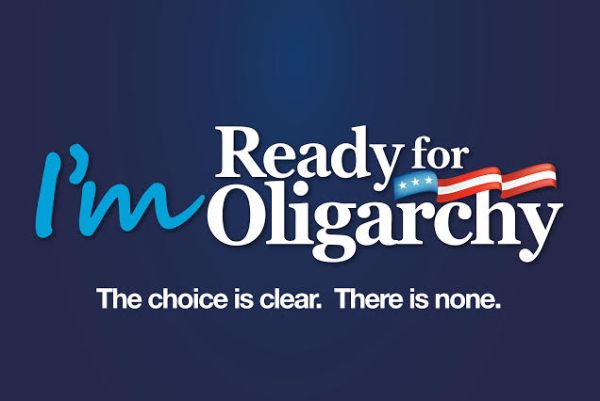
oligarchybanner.jpg

If you can see the flaws in a broken or knowingly deceptive system, it makes literally no sense whatsoever to make use of that system as it is and expect the outcome to change.


All this can ever achieve is legitimisation of that system and assurance that the inevitable outcome it produces will persist unchallenged.

The only viable solution to that problem is to either replace the broken and/or deceptive system with one that actually does do what it is supposed to (or claims to) or fix whatever is preventing it from doing so.

In the case of most nation state’s current electoral systems, by far the most significant and obvious flaw is that they claim to be democratic but in reality can only ever deliver oligarchy masquerading as democracy. If you doubt this, you should probably read up on the 2014 study jointly conducted by Princeton and Northwestern universities that proved beyond doubt that the United States is officially an oligarchy.

Among those who acknowledge it, this problem can seem largely insurmountable. But if you approach it the right way, this is far from the case.

Within faux-democratic electoral systems such as that of the US and the UK, the most glaring and most addressable problem is the total absence of a mechanism that enables voters to formally withhold consent and reject all that is on offer in a way that can actually effect the result if enough people choose to do so.

It is essential to be able to do this in any true democracy because, at its core, true democracy is about people consenting to be represented in government by whoever they collectively choose to elect. But consent is only measurable if it is possible to withhold consent. The act of consenting and endorsing candidates / parties (by voting) is formal and binding, so the act of withholding consent and rejecting must be formal and binding also in order to be valid. Not voting or ballot spoiling / ‘writing in’ are meaningless, informal acts that in no way equate to this.

The only way to do this properly is with a formal, binding ‘None of the Above’ (NOTA) option on ballot papers.

It is essential to be able to do this in a true democracy, so all the while the game of the powerful is to present oligarchy as democracy, NOTA is an achievable reform – or rather would be, if enough people understood it and were calling for it as the democratic pre-requisite that it is. To argue against NOTA, in those circumstances, would be to argue against a central pillar of democracy itself, thus allowing the facade to crumble.

Therefore, it follows that with enough pressure, NOTA could become a government concession to keep the peace and avoid all out, overt tyranny (notoriously costly, in many ways, and nigh on impossible to sustain), as opposed to voluntary, covert tyranny (the self-sustaining goal and inevitable outcome of oligarchy masquerading as democracy).

Once in place, with the prospect of blanket, formal rejection hanging over every party and candidate, NOTA would have the power to trigger further organic reform of any broken and/or deceptive electoral system it has infiltrated, towards one that is truly democratic.

But without this first step, nothing can ever change for the better in such systems as things stand.

From a systems thinking point of view, campaigning for and securing a formal, binding NOTA option on ballot papers in the first instance is literally the most logical and viable solution to the problem at hand. It is the most accessible leverage point at which meaningful intervention can occur. (More on systems thinking and leverage points here).

NOTA is not the be all and end all, but it remains the logical starting point for defeating oligarchy and kick-starting true democracy, once the true nature of that problem is fully understood. For this reason, it should be the priority of any and all progressives, reformers and true democrats at this time.

You can find out more and get involved with NOTA UK’s campaign here: nota-uk.org

Jamie Stanley
NOTA UK
27/04/16

Save

#ResignCameron – And Other ‘Rock & a Hard Place’ Scenarios

"Rock, Hard Place" Road Sign with dramatic clouds and sky.

Unfortunately, as entertaining as it all is, the only thing Cameron resigning over the Panama Papers ‘revelations’ will achieve is the ruination of his beloved legacy. A worthy karmic outcome, perhaps, but nothing more than a sacrificial scalp.


If we had a truly democratic system where an election could be called early if necessary (it can’t, the Tory imposed Fixed Term Parliament act prohibits this) and there were truly progressive parties unshackled from the utterly corrupt world of high finance that can actually win under First Past The Post (there aren’t, despite Corbyn’s apparent 21st century credentials Labour is still crawling with Blairite/Thatcherite Cameron clones while FPTP renders all other parties largely cosmetic), then the PM’s resignation would mean something.

As things stand, celebrating the knives out for Cameron, as satisfying as this is, is really just playing into the hands of those who would seek to oust him from within his own party and take over the reigns. Boris Johnson, IDS, Theresa May etc.

In other words, it’s a sh*t sandwich, as always. Our faux-democracy is incapable of offering up anything else.

Until we are able to get big money and vested interests out of politics altogether and create a system of actual democracy, any apparently seismic changes are bound to be temporary and cosmetic in reality.

Regular viewers will know where this is headed…

The first logical step in creating such a system is to give people the power to utterly reject FORMALLY (currently impossible) all that is on offer at the ballot box. An official, binding ‪#‎NoneOfTheAbove‬ (NOTA) option, in other words. It is a democratic pre-requisite to be able to do this.

Alongside grass roots activism and self-education about the way things really are and how they really could/should be, ‪#‎NOTA‬ ought to be a top priority for all progressives, as it remains the systemic leverage point by which we can begin to build a truly democratic and representative system of governance. An also useful (in my view) switch to Proportional Representation (PR), despite recent signs of an opposition alliance forming to achieve it, remains an unlikely first step all the while the big two have a vested interest in the continuation of FPTP. NOTA, by contrast, would be achievable now if enough people understood it to be the 100% essential democratic check and balance that it is and were calling for it as such.

Newcomers can find out more and get involved by checking out the rest of our website and by joining our facebook group. If you can afford it, please consider making a donation to our totally unfunded, non-partisan, volunteer run campaign via the paypal button at the top right of this page. Thank you.

Jamie Stanley
NOTA UK
08/04/16

A cross party alliance on Electoral Reform – minus NOTA?!

Much is being made in alternative and more progressive mainstream media of the cross party electoral reform alliance that appears to be forming. Clearly, this has implications for our None of the Above (NOTA) campaign. So, in the spirit of solidarity and open debate, here’s my thoughts on the matter.

I believe this alliance to be a long overdue step in the right direction. However, the focus of the alliance appears to be firmly on getting Proportional Representation in place by 2021 – after the next election.

As things stand, by 2020 the Conservatives will most likely have rigged the game even more in their favour via boundary changes and in doing so further cemented their position. As undemocratic and dishonest as this is, it is entirely possible to do this in our current system. As such, it is likely that the current government could remain in power, even in the face of widespread, nationwide opposition after the 2020 election.

The government of the day, even one with a weak majority, still always has a virtual monopoly on the power to pass legislation. Or not pass it, as the case may be. And in the case of PR, the fact remains that, as desirable as it may be, it can still always be argued by its opponents that it is a non-essential democratic ‘optional extra’ and that the current system is ‘democratic enough’, given that our parliamentary system hinges on seat share, not vote share, regardless of the voting system used.

All the while that is the case, I fail to see how PR is achievable. I keep reading that this cross party alliance will lead to PR, even if the government of the day is vehemently opposed to it. How so? I’m happy to be proved wrong on this. If there is a way, that the incumbent government would be powerless to stop, I’d very much like to know what it is.

Either way, a formal NOTA option remains achievable before 2020, with enough understanding and support for it, as it remains essential in any true democracy to be able to formally withhold consent, and is therefore impossible to argue against without arguing against democracy itself. For this reason, with or without PR, NOTA must be there. If, as I suspect, PR remains unachievable in reality, regardless of how much support there is for it (for the reasons stated above), then NOTA would remain the logical starting point.

With that in mind, it would make lots of sense in my view if this cross party alliance began looking into the need for NOTA and considered making it a stated goal alongside their long term plan for PR. I, and I’m sure others from NOTA UK, would be more than happy to advise and facilitate in this regard.

The Green Party of England & Wales is the only party currently who has acknowledged the need for NOTA and adopted an appropriate policy towards it. I believe this cross party alliance presents an opportunity for us to build on that progress and will be contacting members of the alliance in due course to see where they stand on the issue.

Jamie Stanley
NOTA UK
14/02/16

An Open Letter to Russell Brand & Brian May

Dear Russell and Brian,

In the run up to this year’s UK general election, I have been closely following your respective approaches to getting people to engage with the pressing problems of our times.

On the surface of it, you both appear to be wanting the same thing: a fairer, more humane, compassionate and environmentally sustainable society with communities and ordinary people calling the shots as opposed to career politicians and corporate lackeys.

Russell, your message is much more nuanced than the simplified ‘don’t vote’ version of it regularly cited by the mainstream media. What you are basically saying is we need to disengage from the established political system as it is not fit for purpose and instead become politically active at the grass roots level.

Conversely, your message Brian is essentially get involved with the political system as it is by voting for decent candidates and policies in the hope that that will lead to the kind of changes you want to see.

As understandable and commendable as both these approaches are, the truth is that on their own neither of them can work in the long term.

I absolutely agree with you Russell that people need to look outside of the established political system and manage their own communities at a grass roots level. But that established political system will trundle on regardless, awarding thoroughly undeserving, corporately sponsored people disproportionate amounts of real power to ruin the lives of everybody else. So in conjunction with the grass roots engagement you espouse, we urgently need to radically reform the established political system into something that runs parallel to it and compliments those efforts – otherwise attempting to achieve real progress becomes a long, drawn out, stress and disease inducing battle with authority and bureaucracy. The New Era Estate campaign that you championed was inspiring and a perfect example of how and why people can win through when they organise and unite against injustice and corruption. But people shouldn’t have to go through all that just to get what is right. Not everybody has the gumption and fight in them that those people on that estate had. And for those that do, the stress levels involved with taking on the system undoubtedly take their toll in the long run. We need to create a society where it is not possible in the first place for people’s lives to be so utterly disregarded and ruined by a minority in pursuit of short term financial gain.

I also absolutely agree with you Brian that people should be able to influence decision making at a macro, societal level by engaging with the systems already in place. But, unfortunately, the established political system is absolutely a closed shop designed to ensure that no meaningful change of the guard can ever take place. I have written at length elsewhere about why this is the case. In a nutshell, no matter how many people vote and no matter who they vote for, the voting system in the UK guarantees that only one of two establishment parties can ever call the shots in government, even in the age of hung parliaments and coalitions. So Russell is 100% correct to say that engagement with that system in its current form is futile.

As stated, the problem is that this system trundles on regardless. Technically, even if considerably less than 50% of the population were to not vote at a general election, a government would still be able to claim a mandate as our system is not about vote share but seats: they will always be able to achieve a majority of seats in parliament and claim that that is sufficient mandate to govern. Yes, there would be an outcry and much hand wringing and calls for reform in that scenario. But technically there’d be nothing anyone could do about it. No amount of endorsing such a system by voting is going to change that paradigm. But, similarly, no amount of grass roots activism is going to prevent people of the political class from wielding disproportionate amounts of power over everybody else.

The solution to this problem, clearly, is to radically evolve the very systems by which governments are formed in the first place, in conjunction with grass roots activism, so that communities and ordinary people are truly represented at all levels of societal decision making. The million dollar question then is: “How on earth do we do that?”

There is a reason why I have devoted so much of my life over the past five years to campaigning for inclusion of an official None of the Above (NOTA) option on ballot papers – with formalised consequences for the result if the majority choose it – ahead of all other possible reforms and worthy causes. When you truly understand how the current electoral system works, it becomes clear that no meaningful reform of the kind that the Electoral Reform Society campaigns for (PR, right to recall, elected House of Lords etc.) can ever be achieved in the current paradigm. Because the only people that have the power to enact those changes have everything to lose and nothing to gain from doing so and there is currently no way of officially challenging their authority and forcing the issue.

By contrast, inclusion of NOTA on ballot papers is 100% achievable in the current paradigm as it can be clearly shown to be a democratic pre-requisite, impossible to argue against without arguing against democracy itself, once properly understood. This is because consent, central to the concept of democracy, is only truly measurable if it is possible to withhold consent. In the context of elections, consenting (voting) is a formal act. Therefore the withholding of consent must be formal also. Neither abstaining or ballot spoiling constitute the formal withholding of consent as both acts can be construed otherwise and neither affects the result in any way. The only way to formally withhold consent at an election is via a formal NOTA option on the ballot paper.

The powers that be can never be seen to be anti-democratic, even if they secretly are in practice. It stands to reason then, that with enough understanding among the general public of NOTA being 100% essential in any system claiming to be a democracy, it would become an inevitable government concession. This is essentially how votes for women and and the NHS were won. They weren’t benevolent gifts from on high, they were concessions to appease an increasingly politically aware populous. So could it be with NOTA.

Clearly, the fact that no reform other than NOTA is achievable at this time is not necessarily reason enough to champion it. But an understanding of how a post-NOTA inclusion political landscape would look is.

Introducing the possibility for the electorate to reject all candidates and parties on offer at an election would have a huge impact on the system as a whole. No party is going to want to be embarrassingly beaten at the polls by NOTA voters are they. So it follows that this potential would force them to put forward more ‘decent’ policies and candidates that would appeal to many more voters, potential NOTA voters included. So already, an organic levelling off and cleaning up of the political landscape will have occurred. The current two party oligarchy, while still favoured by the First Past The Post system, would for the first time be under threat as those parties will be just as vulnerable as any other to being visibly rejected by more people than not at the polls. In this new paradigm, the potential for further democratic reform would be greatly increased.

This is why NOTA is the ground zero of electoral reform upon which further democratic progress could be built. If we accept that the system cannot be ignored and must change, and if we accept that no other meaningful electoral reform is possible at this time, then we must also accept that campaigning for inclusion of NOTA, alongside grass roots activism, is the logical starting point for taking the power back.

To recap:

Russell, you are right to call for disengagement from the current political system and encourage grass roots, community engagement. But we need to reform that system as well, otherwise we will always be on the back foot, stronger in numbers but out-gunned where it matters. There is a way to do this. It’s called NOTA.

Brian, you are right to want to see increased engagement with the current political system making a real difference. But the sad truth is that it can’t, currently. They have it sewn up. Engagement with the current system is simply to endorse it and ensure its continuation. We need to change the game before we play it. There is a way to do this. It’s called NOTA.

Thanks to NOTA UK’s lobbying, the parliamentary Political & Constitutional Reform Committee (PCRC) felt compelled to explicitly recommend in its final report, published in February, that the next government consult before May 2016 specifically on the issue of inclusion of a formal NOTA option on UK ballot papers for all future national elections. So we have an unprecedented window of opportunity to push for real and lasting democratic reform. This is a huge development. With that in mind, I have written an open letter to all party leaders asking them to state for the record where they stand on this issue. As yet, none have responded.

The three of us, you with your respective audiences and me with a clear, logically sound path to real electoral reform and a growing movement of people getting behind it, could genuinely make history. But all the while we are pulling in different directions, I’m afraid it will be business as usual for those holding the reigns of power for the foreseeable future.

Feel free to contact me via email ( stan(at)nota-uk.org ), I’d be more than happy to discuss these issues with you.

Yours sincerely,
Jamie Stanley
NOTA UK
27/04/15

GAME ON: A response to Andrew Marr

The first shot in our long anticipated battle to define NOTA in the mainstream media has been fired by none other than the BBC’s Andrew Marr writing in the New Statesmen.

And so it begins. A calculated misrepresentation of what a true ‘None of the Above’ option would be, the deliberate association of it with ‘apathy’, ‘instability’ & ‘chaos’ – when in reality, NOTA has nothing to do with any of those things.

The bottom line is this: NOTA is a democratic pre-requisite. It is the ability to withhold consent at an election, consent being central to the concept of democracy but only measurable if it is possible to withhold it. NOTA is therefore an essential check and balance in any true democracy. To argue against it is to argue against democracy itself, once the concepts of democracy and consent are properly understood. For this reason, given that our leaders must always be seen to be pro-democracy (whether they really are or not), NOTA is achievable in the short to mid term – unlike most other touted reforms that are desirable but not central to the concept of democracy and so can be paid lip service to and ignored.

In the context of elections, the withholding of consent must be formal because voting (giving consent) is formal. Neither abstaining or ballot spoiling amount to formally withholding consent, as both can be construed as apathetic or anarchic wrecking options and neither affect the result in any way. An official NOTA option on the ballot paper, with formal consequences for the result if the majority choose it, is the only way to withhold consent formally at an election in a registered, meaningful way.

From there, the next question is: what would happen if NOTA ‘wins’? If implemented properly (unlike faux-NOTA in India and elsewhere), a NOTA ‘win’ must invalidate the result and trigger a new election. Most likely this would occur at constituency level, triggering by-elections. There is already a mechanism in place to deal with an MP dying, whereby a by-election has to be held within three months. Dealing with a NOTA ‘win’ might be as simple as evoking such a mechanism with the incumbent holding the fort in the meantime. In the event that NOTA came out on top nationally, there is no reason why the same principle could not apply.

At NOTA UK, we also have a proposal to avoid voter fatigue that involves lengthening the time period to between six months and a year with the second placed candidate taking office in the meantime purely on a caretaker basis. This would give the caretaker, who will still have polled well, an opportunity to prove themselves worthy of the job and it would also gives all other parties a chance to regroup and look at what went wrong. This proposal is just one possible solution to deal with the logistics of NOTA and is open to debate and adaptation. The important thing is that NOTA must be there, no matter what. It is democracy in action.

The purpose of NOTA is that it is not a wrecking option or something designed to cause instability. Nor does it in any way symbolise apathy. It is a way for the vast, currently voiceless army of politically aware but utterly disenfranchised voters to finally be heard. It is an essential check and balance that could trigger an organic cleaning up of politics as parties realise that they now have to appeal to many more voters, potential NOTA voters included (rather than just their core demographics) and actually mean it – or face permanent rejection at the ballot box. The upshot of this ought to be less and less people making use of the option over time as the parties adapt to the new landscape, giving people a reason to vote for them in the first place. Further democratic reform would also be that much more possible in a system with the principle of NOTA at its core.

The days of making do and voting for the ‘lesser of several evils’, that Andrew Marr is trying to suggest is as good as democracy gets in his article, are over. People have had enough. If true democracy is what the people want then that is what they shall have. The first step on that journey is to get an official NOTA option ‘with teeth’ on the ballot paper for all future UK elections.

Find out how you can support the cause and help us bring that about at www.notauk.org

Jamie Stanley
NOTA UK
24/03/15

‘Election Hacking’: What the Electoral Commission has to say

Followers of NOTA UK’s progress over the last couple of years will know that in the wider NOTA movement the issue is often raised of how best to draw attention to our shared goal of getting a formal None of the Above option on UK ballot papers, as well as the need for NOTA in any true democracy and the level of demand for it. With that in mind, I recently contacted the Electoral Commission to clear up a few questions and hopefully settle a few arguments.

There are a number of strategies that have either been proposed or are being actively pursued by groups and individuals apparently in the name of the NOTA cause. These include:

  • taking ballot papers home en masse
  • abstaining en masse
  • ballot spoiling en masse
  • standing candidates on a single issue NOTA platform

(DISCLAIMER:  While NOTA UK welcomes any action that could draw attention to our cause in a positive way and possibly further it, and while we would not seek to tell anyone else what to do, it does not, as an organisation, actively promote or endorse any of these strategies – for reasons that will hopefully become clear!)

The quotes below are all from an email conversation between myself and George Marshall, Communications and Public Information Officer at The Electoral Commission.

TAKING BALLOT PAPERS HOME EN MASSE

To get the ball rolling, I initially asked George whether taking ballot papers home was legal and if so what would happen if someone tried to do this. Here is his reply:

If a voter is issued with a ballot paper, there is a process set out in the election rules that should be followed. That is, the poll clerk issues the paper, hands it to the voter, the voter marks their paper, the poll clerk observes the voter putting the paper into the ballot box.

If the Presiding Officer (PO) is aware that a voter is leaving the station without putting the paper in the ballot box, the PO would be obliged to ask the voter to put the paper in the ballot box.

If the voter refuses and leaves, then the PO should mark the ballot paper account accordingly. This ensures that at verification there is an audit trail which can explain why there is not the same number of papers in the box as were issued […]

The phrase mark the ballot paper account accordingly’ just means that the Presiding Officer would note on the ballot paper account that a ballot paper had been removed by a voter from the polling station and not placed in the ballot box. The Presiding Officer would adjust the figures on the ballot paper account to show this so that at the count there would be an accurate tally of the number of ballot papers in the ballot box with the number stated on the ballot paper account.”

I then asked what would happen in the event that more people in a constituency took their ballot paper home than actually voted and whether this would have any effect on the result or not, informing him that my understanding is that it would not. His reply:

You are correct – this would not have any effect on the result.

In summary then, it is perfectly legal to attend the polling station with your polling card, collect your ballot paper and take it away instead of voting. This would be counted as a removed ballot, separate and distinct from all spoiled ballots, people who simply didn’t attend the polling station and people not registered to vote. As such, this strategy could arguably be seen as a solid way of manufacturing a way of unambiguously recording voter discontent.

However, regardless of how many people were to do this, it categorically cannot effect the election result in any way. As such, it would in no way simulate or act as a substitute for actual NOTA ‘with teeth’ (i.e.: formalised consequences for the result if it were to ‘win’).

ABSTAINING / SPOILING BALLOT PAPERS EN MASSE

The difference between either of these approaches and actual NOTA ‘with teeth’ is well documented on this site. In a nutshell, abstaining can be dismissed as voter apathy with no further analysis, while ballots spoiled in protest are lumped in with those spoiled in error for counting purposes, rendering the resulting figure meaningless as a measure of voter discontent. As such, neither of these approaches in any way simulates or acts as a substitute for actual NOTA ‘with teeth’. Some people believe, however, that if this were done in numbers it would in some way affect the result.

With that in mind, I asked George if my understanding that a majority of registered electors choosing to either not vote at all or spoil their ballot papers would have no effect on the result was correct. His reply:

“That is correct – this would not affect the result and the candidate with the most votes would still win.”

In summary then, not only does abstaining or spoiling the ballot paper in no way meaningfully register voter discontent, it absolutely cannot affect the result in any way, even if done in large numbers.

STANDING CANDIDATES ON A NOTA PLATFORM

This is also covered extensively elsewhere on this site. Suffice to say that forming a party or standing as an independent on any single issue, regardless of what it is, clearly only constitutes the addition of another ‘one of the above’ to the ballot paper and not a functioning NOTA option, as has been claimed by some. Proponents of adopting this strategy in the name of NOTA tend to fall into two camps:

1: Those who recognise it is as a symbolic gesture only and acknowledge that if elected any candidate standing on a NOTA platform ought really to step down immediately, thus simulating NOTA ‘with teeth’ and triggering a by-election.

2: Those who believe that if elected they would be able to push for NOTA from within Westminster whilst either remaining silent on all other issues or expanding beyond the single issue of NOTA into other political realms.

The problem of the latter approach is self-evident. Any campaign to get NOTA on the ballot box must, by definition, be politically neutral if it is to be taken seriously at all. Political parties with the prospect of being elected invariably attract people with agendas above and beyond the self-limiting remit of any campaign for a bona fide NOTA option.

The former approach, while making more sense, we have always seen as extremely risky and something that should only be considered as a last resort i.e: if we were still struggling to be heard in the run up to the election. If not enough people backed such an approach, the result would be a perceived lack of support for NOTA, potentially taking the campaign backwards. Indeed, this is true of all the ‘election hacking’ strategies outlined above – without the right level of support, each of them has the potential to backfire and undermine the NOTA campaign significantly.

CONCLUSION

As a result of NOTA UK’s lobbying and the general public getting involved in the fight, the parliamentary select committee for Political & Constitutional Reform (PCRC) were compelled to explicitly state in their recent report on increasing voter engagement that the next government should consult before May 2016 solely on the issue of NOTA’s possible inclusion on ballot papers.

This means that the hitherto seemingly impossible task of getting the urgent need and demand for NOTA on the UK government and wider public’s radar has now been achieved. As a result, we are now in the unprecedented position of being able to add our voice to the mainstream debate in the coming weeks and months. We also have a clear window of opportunity to embed the solid arguments for NOTA firmly in the public consciousness and put pressure on the next government to adhere to the PCRC’s recommendation – without having to resort to gimmicks or risky strategies such as those outlined above.

For this reason, there is no need for NOTA UK to endorse or get behind any of the above approaches as we are already very much on track to making NOTA a reality.

That said, supporters of the NOTA cause are of course free to do as they see fit on election day. If you feel that any of these approaches represents a way of expressing your disdain for the current political landscape and your support for NOTA, then you must do what makes sense to you. All we would ask is that any organised groups or campaigns make clear that they are separate and distinct from NOTA UK and that they endeavour to reinforce, rather than detract from, the solid arguments for NOTA that we are making and will continue to make.

That being the case, and all being well, there is absolutely no reason why future generations will not one day be found scratching their heads in amazement at the very idea of ‘None of the Above’ NOT being on the ballot paper.

Onwards & Upwards!

Jamie Stanley
NOTA UK
02/03/15

NOTA campaign gets massive boost from parliamentary select committee!

On 05/02/15, the parliamentary Political & Constitutional Reform Committee (PCRC) published its report into ‘voter engagement’ in which it recommends a whole slew of genuinely quite radical (by UK standards!) electoral reforms to be implemented during the next parliament. The full report can be downloaded here.

Here’s what they had to say about NOTA, as a result of NOTA UK’s lobbying and public engagement with the committee:

“Having the option to vote for “none of the above” on the ballot paper is the proposal which has had the largest support among those who have given their views to the surveys we have drawn upon. This change would enable people to participate at elections even if they did not wish to vote for any of the candidates presented. If large numbers of people did choose to cast their vote in this way it would serve as a wakeup call for candidates and parties that they needed to do more to gain the support of the electorate. We recommend that the Government consult on including, on ballot papers for national elections, an option for voters who wish to participate but not vote for any of the candidates presented, and report to the House on this proposal by May 2016.”

This really is a huge leap forward for us. Although the committee has stopped short of including NOTA as one of its recommended immediate reforms, it has explicitly stated that it believes that the demand for NOTA and the potential positive effects on voter engagement of having it means that the next government must hold a public consultation on the issue.

Although this is slightly less than we could have hoped for, it is still a huge achievement when you consider that a year ago the mere mention of NOTA in the corridors of power was likely to be met with derision and a cold shoulder.

The PCRC survey mentioned above, in which we were able to get them to publish a question about inclusion of NOTA as a reform in and of itself regardless of whether voting is made compulsory or not, is very telling. This question got the second most responses (15,840), beaten only by the question about compulsory voting (16,095).

A whopping 71.8% of respondents to our question voted ‘yes’ to NOTA.

I think it’s fair to say we have now successfully put NOTA on the map, a key aim of this campaign from the beginning five years ago. There’s a long way to go of course. But no-one can say we aren’t getting the arguments heard and moving in the right direction.

A massive thank you to everyone who took part in the consultation and to all our facebook, twitter, youtube and website followers for your continued support in our efforts to make UK democracy fit for purpose.

Onwards & Upwards!
Jamie Stanley
NOTA UK
05/02/15

Sign our 38 Degrees Petition here: https://you.38degrees.org.uk/p/NOTA-UK

Join our Facebook group here: https://www.facebook.com/groups/notauk

Follow us on Twitter here: https://twitter.com/NOTAcampaign

Subscribe to our YouTube channel here: https://www.youtube.com/channel/NOTAUK

To subscribe and receive notifications about new posts and articles on this blog, please click the “Follow” button at the bottom right of the page.

Democracy Audit: Why NOTA is the Ground Zero of Electoral Reform

On the 8th January 2015, NOTA UK member Rohin Vadera had an article published on the website Democracy Audit making the case for NOTA.

Two weeks later, Richard Berry, Research Associate for the Democracy Audit website and the London School of Economics Public Policy Group, responded with an article rebutting NOTA and citing three other reforms he deemed more important.

Here NOTA UK founder Jamie Stanley responds to Berry’s article:

“Why NOTA is the Ground Zero of Electoral Reform”